

某些 Matter 设备由多个具有相同设备类型的端点组成。其他 Matter 设备采用分层结构,端点嵌套在其他端点内。在 Home API 中,这两种设备都称为多部分设备。
平面表示形式
在 Home API 的 1.8 版之前,Home API 将多部分设备表示为一组单独的、不相关的设备。这称为“扁平”表示法。
例如,一个带有四个开关的单壁面板设备在 Home API 中显示为四个不同的无关设备。而冰箱等分层 Matter 设备在 Home API 中可能表示为一组设备,每个设备对应一个端点。
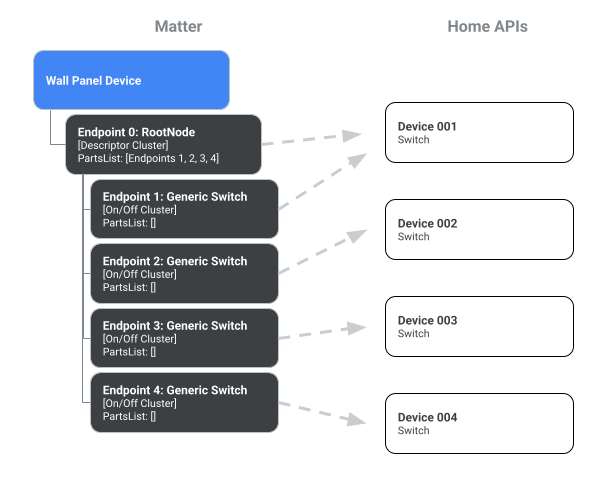
4 开关墙面板的平面表示。
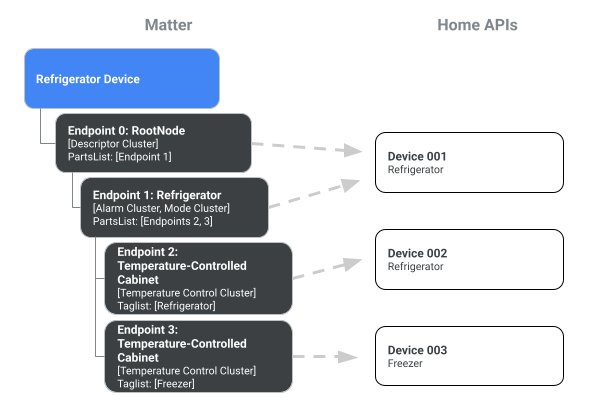
冰箱的扁平化表示
多部分表示法
从 Home API 的 1.8 版开始,多部分设备可以在 API 中表示为单个设备。如需启用此行为,请对 Structure、Room 或 HomeManager 调用 devices() 方法,并将 enableMultipartDevices 参数设置为 true:
var multipartDevice = structure.devices(enableMultipartDevices = multipartEnabled)
var multipartDevice = multipartDevices.list().filter{ device ->  device.has(PowerStrip)}
以下图表说明了 enableMultipartDevices 选项如何影响 Home API 中多部分设备的表示方式:
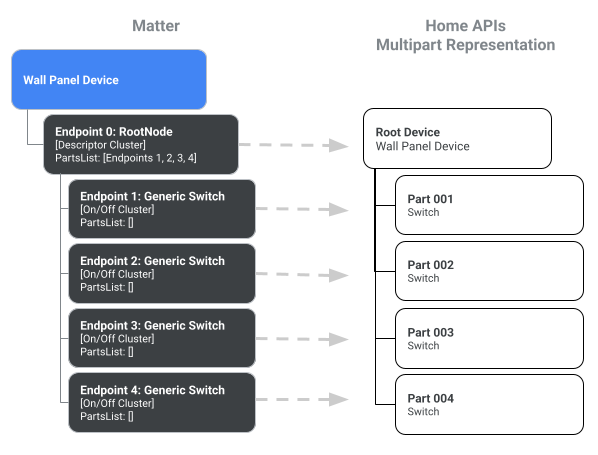
墙板的多部分表示形式。
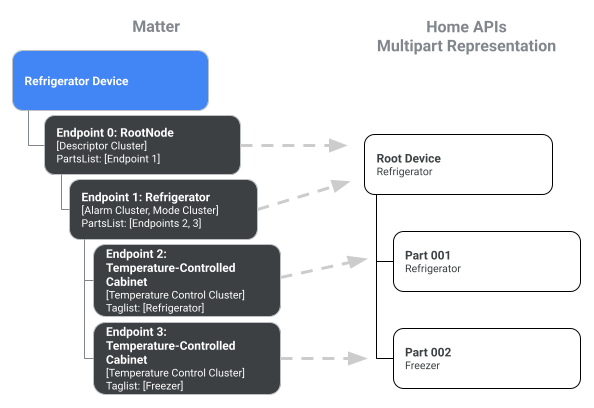
冰箱的多部分表示形式。
您可以随时选择通过省略 enableMultipartDevices 参数或将其设置为 false 来获取扁平表示法。
浏览多部件设备
在多部件设备中,设备类型的每个组件实例都称为“部件”。
可以使用设备类型或 Matter 语义标记,直接在父设备上或以分层方式访问部件。语义标记是在 Home API 中通过 DescriptorTrait.SemanticTagStruct 实现的。
DeviceType 抽象类实现了 HasParts 接口,使开发者能够通过 parts 属性和 part() 方法浏览设备树。每个部件实例还实现了 HasParts 接口,因此对部件调用 parts() 会生成一个包含零个或多个子部件的列表。
以下示例展示了如何访问多开关设备的各个部分:
val device =
      homeManager
        .devices(enableMultipartDevices = true)
        .itemFlow(Id(MULTI_SWITCH_DEVICE))
        .first()

// Here at top-level, we are using the homeDevice.parts() API to access flow of
// all the switches. Then we get the part ids.
val partIds =
      device
        .parts()
        .map { parts ->
          parts.filter { it.has(Switch) }.mapNotNull { it.metadata.partId }
        }
        .first()
        .toSet()
以下示例展示了如何访问冰箱设备的部分内容:
val rootDevice = homeManager.devices(true).itemFlow(Id("device@uuid1"))

// On the top level, HomeDevice provides both plural (parts)
// and singular (part) APIs.
// The parts() API returns all the parts accessible from the top level,
// including Endpoint 0 and its children.
val childParts = rootDevice.parts().first()
// childParts contain (EP0 as RootNode, EP1 as Refrigerator)

// The singular part() API accepts DeviceType and tags (optional).
val refrigerator = rootDevice.part(Refrigerator).first()

// Get the refrigerator device which in this case is just device@uuid1
val refrigeratorDevice = homeManager.devices(false).itemFlow(refrigerator.metadata.partId.deviceId)

// DeviceType uses a synchronous API for providing access to parts
val cabinets = refrigerator.parts  // [EP2, EP3]

// Get the HomeDevice for these cabinets (device@uuid2 and device@uuid3)
val cabinetDeviceIds = cabinets.map { it.metadata.partId }

// Now use the devices API with enableMultipartDevices = false.
val cabinetDevices = homeManager.devices(false)
    .map { devices ->
devices.filter { it.id in cabinetDeviceIds }
}.first()